Chemistry
From equipment to textbooks, websites to periodic tables, you'll find everything you need to successfully teach chemistry in your homeschool.
Things to See & Do in Colorado
Homeschool Science Colorado (HSC)
Homeschool Science Colorado (HSC) is a homeschool group organized to participate in Science Olympiad. Founded in the fall of 2008, Homeschool Science Colorado has built a reputation as a top competitor while emphasizing teamwork and integrity. Teams from HSC have consistently placed among the top ranked teams in the state of Colorado.
Denver Museum of Nature & Science
The Denver Museum of Nature & Science is the Rocky Mountain region’s leading resource for informal science education. A variety of exhibitions, programs, and activities help Museum visitors experience the natural wonders of Colorado, Earth, and the universe. Includes an IMAX theater and a planetarium.
Chemistry Teaching Tips & Ideas
Chem4Kids
A great website for kids to learn about chemistry. Basic chemistry help and information with facts about matter, atoms, elements, the periodic table, reactions and biochemistry.
How I Teach a Large Family in a Relaxed, Classical Way: Science
Family style learning is a great way to tackle lots of different subjects, including science.
Chemistry Homeschool Curriculum
Christian Kids Explore Chemistry
These user-friendly, unabashedly Christian, one-year science curriculums for elementary students include teaching lessons, coloring pages, hands-on time, memorization lists, review sheets, creative writing assignments, and a supplemental book list. The Chemistry text is intended for grades 4-8, and includes such hands-on activities as making model atoms, breaking covalent bonds, and making gas expand. It also lists chemistry terms, notations, and rules. The conversational style gives students the basic information they need, making this an ideal first course in life science, especially useful for those following a classical approach.
Chemistry Activities & Experiments
ExploraVision
ExploraVision is a competition for all students in grades K-12 attending a school in the U.S., Canada, U.S. Territory or a Department of Defense school. Homeschooled students are eligible to enter. It is designed to encourage students to combine their imagination with their knowledge of science and technology to explore visions of the future. Teams of students select a technology, research how it works and why it was invented, and then project how that technology may change in the future. They must then identify what breakthroughs are required for their vision to become a reality and describe the positive and negative consequences of their technology on society. Winning ideas have focused on things as simple as ballpoint pens and as complex as satellite communications. The student teams write a paper and draw a series of Web page graphics to describe their idea. Regional winners make a Web site and a prototype of their future vision.
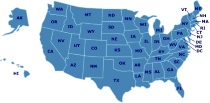
Looking for Another State?
Featured Resources
As an Amazon Associate, we earn from qualifying purchases. We get commissions for purchases made through links on this site.
TruthQuest History
The TruthQuest History series consists of ten volumes that serve as guides for parent wishing to use real books in their approach to history education. They are full of book recommendations, along with information on the topics of study. There are also writing exercises included in these texts.

One Thing at a Time : 100 Simple Ways to Live Clutter-Free Every Day
Simple, effective ways to put things in their placeThose piles of papers, clothes, and other things you thought you'd successfully de-cluttered have returned, and this time they brought friends. What's the use of trying to fight the clutter? Is there a better way?This powerful and useful guide delivers solutions that work, no matter how overwhelmed you feel. The answer isn't an elaborate new system, or a solemn vow to start tomorrow. Instead, psychotherapist and organizer Cindy Glovinsky shares ...

Elementary Geography
Elementary Geography is a reprint of the original work by Charlotte Mason. It includes her ideas about teaching children about their world, with poetry selections throughout the book. Explores ideas of place from space to our earth, seasons, map making, and topography. Written in a pleasing conversational style, it is useful for understanding teaching methods, memorization, and copy work.

Cuisenaire Rods Multi-Pack
Grades Pre K & up. An economical way to bring rods into the classroom. Pack contains six sets of 74 rods, six trays with, and Teacher's Guide. For use with 12-18 students.
The Story of the World
This book series by Susan Wise Bauer is another that is best enjoyed as a read aloud rather than seen as a history textbook. It is full of engaging stories, mixing facts and historical legends. The companion study guides offer questions, narration exercises, activities, crafts, and reproducible pages. There are also lists for each chapter of supplemental books that are easily found at your local library.
Story of the World: History for the Classical Child, Volume 1: Ancient Times (From the Ear...